TECH
How Does Tap to Pay Work?
A short radio link, a one-time code and a check by your bank: here is what happens in the moment between the tap and…
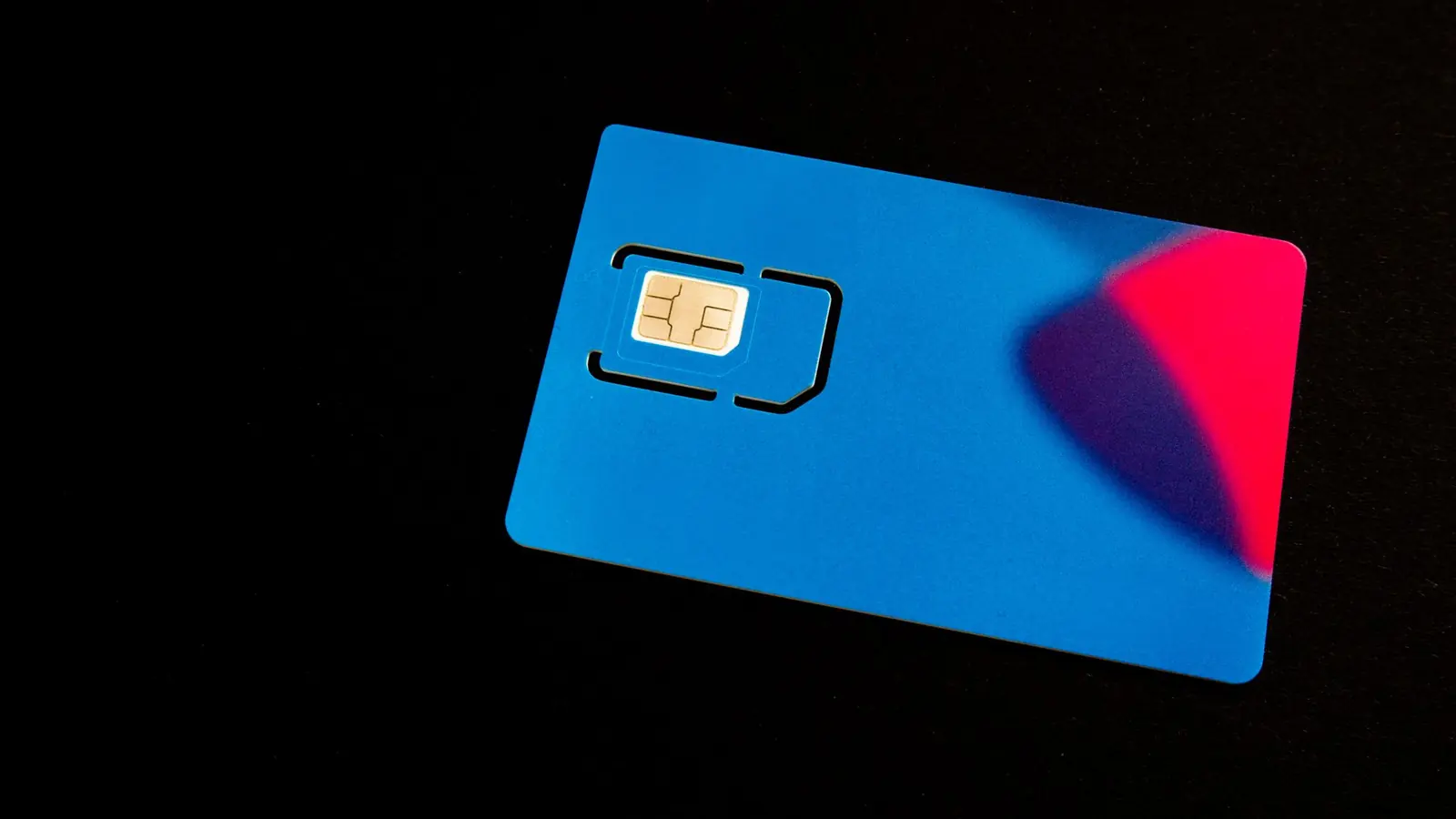
For years, getting a phone onto a network meant pushing a tiny plastic card into a tray. So what is an eSIM, and why are many new phones dropping that tray? The short answer: the SIM moved from a card you handle to a chip inside the phone, and the details now arrive as a download.
At KKSL News we keep it simple, so here is what the chip holds, how the download works and what changes for you.
Table · KKSL News
Physical SIM card vs eSIM
| Question | Physical SIM card | eSIM |
|---|---|---|
| What is it? | A removable nano-SIM card in a tray | A chip fixed inside the device, about 6 mm by 5 mm |
| What job does it do? | Proves the device to the carrier’s network | The same job, using a downloaded profile |
| How does a new plan arrive? | The carrier gives you a new card | An encrypted profile downloads from the carrier’s server |
| How do you start it? | Insert the card | Carrier activation at setup, or scan a QR code |
| How many plans can it hold? | One per card | Several; Apple says iPhone manages eight or more |
| How do you switch plans? | Swap the card | Enable, disable or delete profiles in settings |
Read across each row to see how the same SIM job is done by a card and by a built-in chip.
Source: GSMA: A guide to eSIM Architectures (2024), Apple Support: About eSIM on iPhone, Wikipedia: eSIM
A SIM is your phone’s ID badge for the carrier. The GSMA, the trade body for mobile operators that writes the eSIM specifications, puts it plainly: although an eSIM is technologically different from a physical SIM, its primary purpose is the same. It authenticates the device so it can make calls, send messages and reach the operator’s network.
The badge part is a set of carrier details called a profile. On an old-style SIM, the profile is written onto the card at the factory, so changing carriers means changing cards. An eSIM keeps the profile in a form that can be added and removed.
The hardware is a chip called an eUICC, short for embedded universal integrated circuit card. It is soldered onto the phone’s circuit board. A common version is a surface-mount chip about 6 mm by 5 mm.
The GSMA lists some knock-on effects for device makers. With no card tray, there is more room inside, which can go to a larger battery, and one fewer opening in the case makes a device easier to waterproof. That is one reason small devices such as smartwatches were the first use case the GSMA defined for consumer eSIMs.
The GSMA’s consumer eSIM specification, first published in 2016, describes a “pull” model in which you start the download. It has three main players:
A typical example from the GSMA: you buy a phone online and sign up with a carrier. The carrier prepares a profile for your chip and gives you a QR code. Scanning it tells the phone which server to contact. The profile then travels encrypted end to end from the server to the chip, and only the chip can decrypt it.
Phone makers wrap this in friendlier steps. Apple says an iPhone bought from a carrier often has its eSIM assigned at purchase and set up during the first start-up, which Apple calls carrier activation. Otherwise you can scan a carrier’s QR code with the Camera app. Where the carrier supports it, Quick Transfer moves a number from an old iPhone to a new one when both run iOS 18.4 or later and sit near each other with Bluetooth on.
Yes. Because profiles are just data, one chip can store several. Apple says an iPhone can manage eight or more eSIMs, and iPhone 13 models and later support Dual eSIM, so two lines can be active together. The GSMA says the consumer design allows more than one profile to be active at the same time.
The user is in charge. Under the consumer specification you can enable, disable, delete or swap a profile yourself, in the settings menu, without a store visit or a pin to open a tray.
The first phone with an eSIM was Google’s Pixel 2 in October 2017, following Samsung’s Gear S2 Classic 3G watch in 2016. In the United States, Apple went further in 2022: the iPhone 14 models sold in the US have no SIM tray at all.
Apple’s current list shows that iPhone 14, 15, 16 and 17 models bought in the US are eSIM-only, along with newer models such as iPhone Air. Phones bought in many other countries still have a tray, so the same model name can work differently depending on where it was sold.
The profile lives on one device's chip, so it has to be moved or reissued for a new phone. On iPhone, Apple's Quick Transfer can move a number between two iPhones when the carrier supports it.
The GSMA, the mobile operators' trade body. It published its first eSIM specification for machine-to-machine devices in 2014, the consumer version in 2016 and an Internet of Things version in May 2023.
Not quite. The job is the same, but the profile on an eSIM is downloaded and can be swapped by software, while a card's profile stays fixed to that card.
Sources
Spotted an error? Read our editorial policy or tell us. Fixes are logged on the corrections page.
A short radio link, a one-time code and a check by your bank: here is what happens in the moment between the tap and…
5 min read